ECB: France and Lagarde’s future in focus
At the European Central Bank (ECB), the focus is likely to be primarily on France’s strained fiscal situation. We maintain our assessment that the central bank is still far from activating its anti-fragmentation instrument TPI to stabilize French government bonds. Rather, President Christine Lagarde is likely to make clear once again that the solution to France’s debt problems lies in Paris and not in Frankfurt.
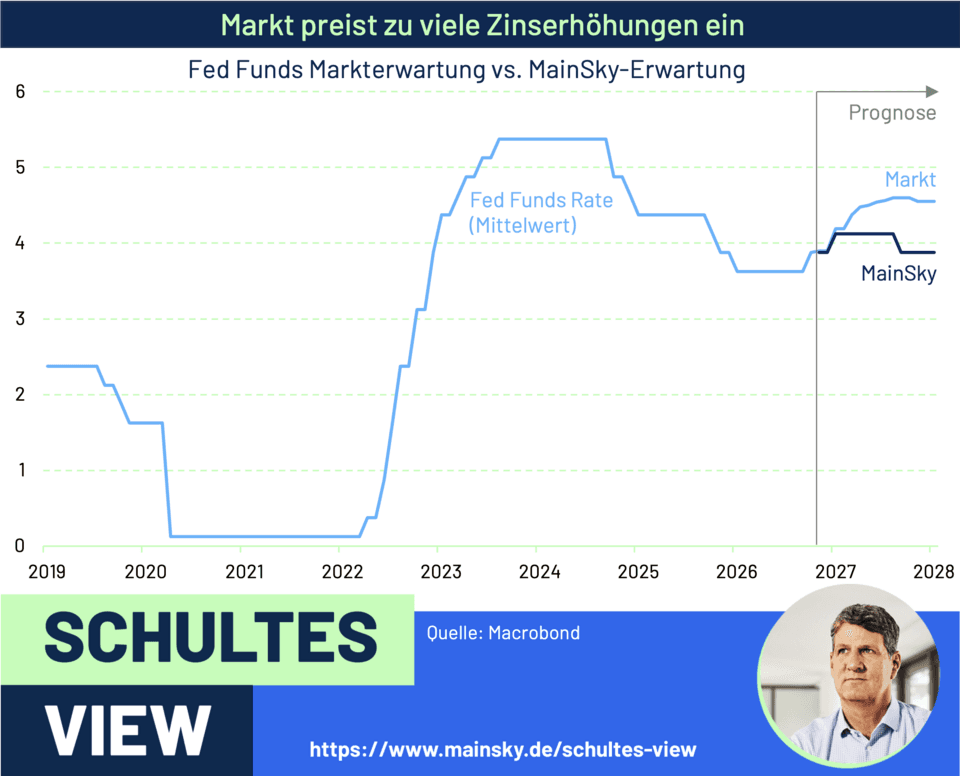
At the same time, Lagarde is likely to be careful not to add further fuel to the fire verbally. The recent sharp rise in bond yields is already dampening growth and inflation. There is therefore little reason to further fuel the rate hikes for next year, which are already aggressively priced in. In our view, a rate hike in December remains likely, but it is by no means a foregone conclusion. Another decisive factor is likely to be how the situation in the Middle East develops after the US midterm elections.
Questions about Lagarde’s personal future could add further tension. In particular, the possibility of an early resignation is likely to be discussed, in order to allow a new appointment to the top of the ECB before the French parliamentary elections.
Fed in wait-and-see mode, Warsh searching for his course
At the Fed, too, a pause in rates is considered almost certain. The policy rate range is likely to remain at 3.75 to 4.00 percent. A few days before the US midterms on November 3, the central bank is likely to switch into wait-and-see mode for the time being. For Fed Chair Kevin Warsh, communication will be the main challenge. After several unfortunate press conferences, he needs to succeed in giving the markets more guidance without committing himself to a monetary policy course through concrete forward guidance.
In the US, too, a further rate hike in December remains in play. For 2027, however, we continue to regard the rate hikes priced in by the market as excessive. In our view, this applies to both sides of the Atlantic.